Classes & lessons
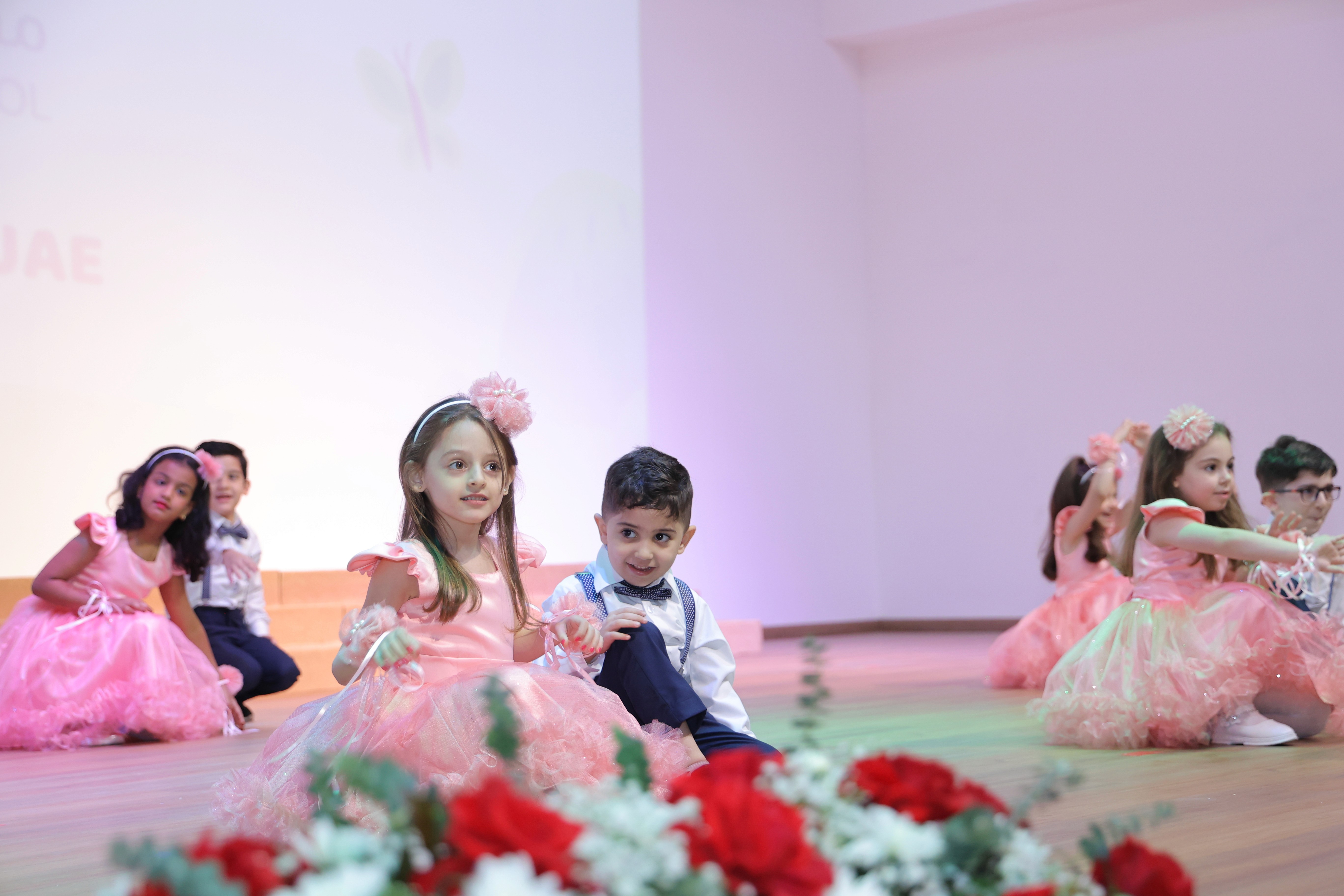
The classroom environment at this stage is characterized by reliance on interaction and activity, where children tend to work or play in organized small groups, whether in an educational or sporting context, and in educational corners or school playgrounds. Lessons focus on using safe tools to build and shape models, and employing comic strips (electronically or on paper) to acquire knowledge, while training children on basic interactions with computers and smart boards appropriate for their developmental stage.
Subjects in the Cycle
The materials at this stage focus on foundational basics, including languages (Arabic and English) to learn letters, simple reading and writing of words and sentences, and mathematics covering numbers (up to 20) and simple operations (addition and subtraction), as well as patterns and shape recognition. It also includes science for exploring the surrounding environment (desert, marine, mountainous) and its characteristics, in addition to Islamic and national education to strengthen belonging to religion, homeland, customs, and traditions.
الاسم
الاسم
الاسم
الاسم
الاسم
Learning outcomes
Knowledge
This aspect focuses on building the child's knowledge base, where he is expected to employ his scientific knowledge to pose exploratory questions about his surroundings to arrive at simple answers. It also includes the ability to distinguish between letters in both Arabic and English in terms of shape and position, and to proficiently read and write some simple words and sentences. In mathematics, the child demonstrates knowledge of numbers up to 20 and uses them in addition and subtraction operations and patterns, as well as distinguishing between objects according to their characteristics such as color, shape, size, and direction.
Skill
The outputs target the development of life and behavioral skills, where the child shows behavior that reflects his commitment to his habits, traditions, and allegiance to his religion and country. He also recognizes the characteristics of the surrounding environments (desert, marine, mountainous). The skills include using verbal and non-verbal communication to express feelings, the ability to use safe tools to build models in science and mathematics, as well as basic skills in dealing with technologies such as computers and smart boards, and practicing healthy and sound eating habits.
Independence and Responsibility
The child's independence is enhanced through training him on organization and precision when executing simple performance tasks appropriate for his age. He also shows a sense of responsibility and respect towards the environment he is in. The outputs in this regard include the child's understanding of routine procedures, modifying his behavior accordingly, and awareness of the consequences resulting from his actions.
Interaction with the Work Environment and Self-Development
The child is expected to demonstrate the ability to interact smoothly with adults and form positive relationships with his peers, while understanding the components of the family and the importance of belonging to it. The child tends to work and play in organized groups. In the area of self-development, the child uses comics to acquire scientific knowledge and interests, and practices using tools like an abacus to carry out simple calculations.
Assesments
Evaluation Methodology
Assessment in kindergartens is primarily based on continuous observation of the child's performance and behavior during daily activities and play. There are no formal written tests; rather, the child's progress in acquiring developmental and cognitive skills is evaluated through interaction with teachers, peers, and educational tools.
Focus Areas
The assessment focuses on measuring the development of language, social, and motor skills, as well as the child's ability to integrate into the school environment. The child's adherence to instructions, ability to be self-reliant in simple tasks, and development of awareness regarding values and healthy habits are monitored to ensure readiness for transition to the next educational stage.